
Formation > Information
I was asked to lead an entrepreneurship lab on the financial models of businesses.
What followed was three hours of discussion of a plethora of business models, stories of why different companies chose different paths, and what ensued: the good, the bad, and the ugly.
It was a vast amount of information shotgunned out at these students.
To be honest, as my longest lab yet, and my first focused directly on business, some first-time jitters probably kept me talking a little too fast.
At the end of class, I slowed down, sat in a moment of stillness and then asked each student a simple question:
Give me a word or phrase that describes how you feel about entering the working world.
This is what I heard:
Bleak, hopeless, meaningless, overcomplicated, shift to meaning, making a mark, stoked, disheartening, so competitive, opportunities, wide open, accelerating, kind of going to hell but I’m going to enjoy it, outlook on humanity not great, expect massive upsets, exciting but what to choose, how to make a decision as technology changes, AI, tech, opportunity hitting rock bottom.
This list did something to my heart.
I could feel the confusion and overwhelm they’re carrying as they look toward the working world. And I began to realize something:
They have already received too much information.
I entered the lab believing the best thing I could do for these students was impart as much information as possible. I left believing information may not be what they need most.
Maybe what’s needed is a detox from information. A restoration of the heart. A true diagnosis of the condition of this generation.
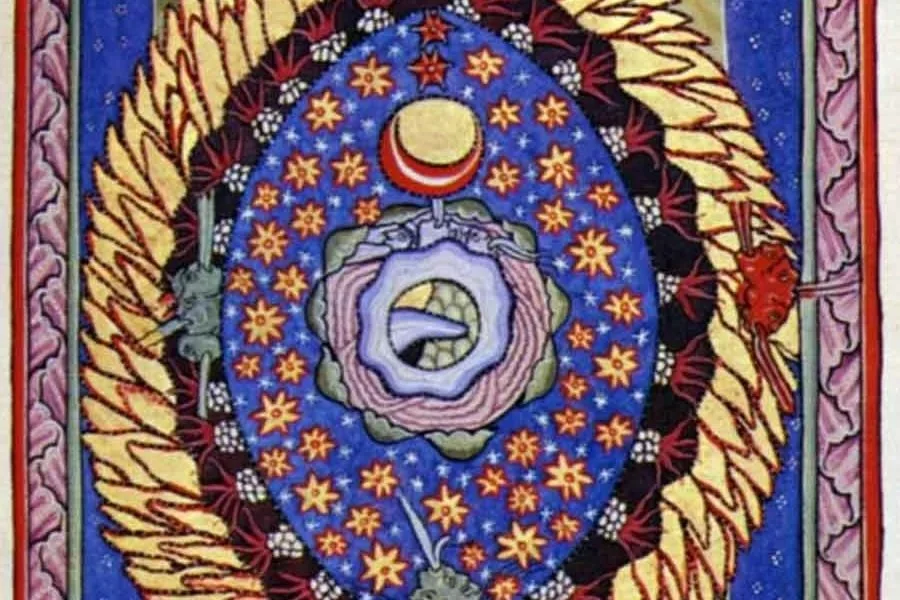
Henri Nouwen writes about diagnosis as knowing through and through. And increasingly, I believe this is part of the work of Hildegard.
We’re not simply here to impart information. We’re here to begin to diagnose.
To pay attention. To help students understand how to think about things, rather than merely telling them what to think.
Because in a world where information is nearly infinite, knowing more cannot be the ultimate goal. The harder questions are: How do I discern what matters? How do I know what is good? What deserves my attention? What kind of person am I becoming? And from that place, what should I do?
That work starts deeper than the intellect.
It starts with the heart.
Tuning in. Paying attention. Learning to discern.
This is formation work. And perhaps this is the beginning of wisdom.